PERSONAL FINANCE | COST OF LIVING | AMERICAN ECONOMY
For years, Millennials were told that their financial struggles were largely their own fault.
They were accused of spending too much money on avocado toast, expensive coffee, streaming subscriptions, and unnecessary luxuries.
If they simply worked harder, saved more, and made better decisions, critics argued, they could afford the same comfortable middle-class lifestyle their parents enjoyed.
But now, as Generation Z enters the American workforce, a familiar financial reality is becoming impossible to ignore.
Even working 40 hours a week doesn’t necessarily mean you can afford to live independently, save money, or plan for the future.
A monthly budget illustration circulating online captures the frustration many younger workers feel.
It shows how quickly a full-time paycheck can disappear into basic living expenses — before entertainment, vacations, emergencies, or long-term savings even enter the picture.
And the numbers reveal something that Millennials have been saying for years.
Perhaps the problem was never just avocado toast.
The Monthly Budget That Has Everyone Talking
Imagine being a young American working full-time, earning a seemingly reasonable salary, and still struggling to make ends meet.
You aren’t spending hundreds of dollars on designer clothes.
You aren’t taking expensive vacations.
You’re simply paying for housing, groceries, transportation, and other basic necessities.
Consider this illustrative monthly budget for a Gen Z worker living independently in the United States.
ILLUSTRATIVE MONTHLY BUDGET · UNITED STATES
Where the paycheck disappears
| Rent | $1,600 |
| Utilities | $250 |
| Groceries | $400 |
| Car and insurance | $350 |
| Phone and internet | $150 |
| Student loan payments | $300 |
| Healthcare | $200 |
| Other necessities | $200 |
| Total monthly expenses | $3,450 |
These are example expenses, not verified figures from an identified worker. Actual costs vary significantly by location, household, benefits, and lifestyle.
Now imagine that worker earns $50,000 annually.
That sounds like a respectable starting salary.
But after federal income taxes, payroll taxes, possible state taxes, and other paycheck deductions, their monthly take-home pay could be substantially lower than their gross salary suggests.
For illustration, suppose they receive $3,300 per month after deductions.
Monthly take-home pay
$3,300
Monthly expenses
$3,450
Monthly balance
−$150
A shortfall before any unexpected expense.
That means this hypothetical worker is losing $150 every month simply by covering ordinary expenses.
A car repair, dental appointment, or emergency trip could make the situation significantly worse.
And there’s still no money allocated for a down payment on a home, retirement savings, or a meaningful emergency fund.
This is the financial pressure at the center of the debate.
The Original Budget Was Even More Striking
The image that inspired the discussion showed a different, much smaller budget.
On a handwritten board, a worker’s monthly take-home pay was listed as $1,946.
Their estimated expenses were:
- Gas: $900
- Rent: $600
- Car and phone: $200
- Food: $150
Total: $1,850.
That left just $96 per month.
The arithmetic is straightforward.
But the financial implications are significant.
Even if the person saved every remaining dollar, they would accumulate only $1,152 over an entire year.
That is before accounting for emergencies, clothing, healthcare, repairs, or other expenses not included in the handwritten calculation.
One detail stands out immediately: $900 for gas is unusually high for many commuters and would require additional context, such as extensive driving or unusually high fuel consumption.
The budget also does not establish the worker’s location, employment circumstances, or whether the figures represent a typical month.
Nevertheless, it illustrates how little room for error a household can have when income barely covers expenses.
And for younger Americans, that lack of financial breathing room is a familiar concern.
Why Millennials Are Reacting So Strongly

For many Millennials, the conversation feels painfully familiar.
Born between 1981 and 1996, Millennials entered adulthood during a period marked by major economic disruptions.
Many graduated from college around the Great Recession of 2007–2009 or struggled to establish careers during its aftermath.
Others faced rising student debt, expensive housing, and wages that did not always keep pace with living costs.
Throughout these challenges, they were frequently criticized for their spending habits.
The idea that Millennials couldn’t afford homes because they purchased expensive coffee became a cultural stereotype.
The famous avocado-toast debate turned into a symbol of generational frustration.
Critics argued that younger adults needed to sacrifice small luxuries to achieve financial stability.
But Millennials countered that eliminating a few discretionary purchases could not compensate for large differences between housing costs and earnings.
Now, watching Gen Z face similar obstacles, many Millennials see their own experiences repeated.
The frustration isn’t necessarily directed at younger workers.
It’s directed at the familiar argument that financial insecurity can always be solved through individual discipline.
The Housing Market Has Changed the Rules
For many Americans, housing is the single largest monthly expense.
And this is where the generational divide becomes particularly visible.
Decades ago, homeownership was more attainable for many middle-income households, although access was never equal across all communities.
Today, prospective buyers face a combination of expensive homes, borrowing costs, property taxes, insurance, and maintenance expenses.
Even workers who manage to save for a down payment may struggle to qualify for a mortgage.
A household might earn enough to cover its current rent but still fail to meet a lender’s affordability requirements.
Higher mortgage interest rates can also dramatically change the monthly payment on the same property.
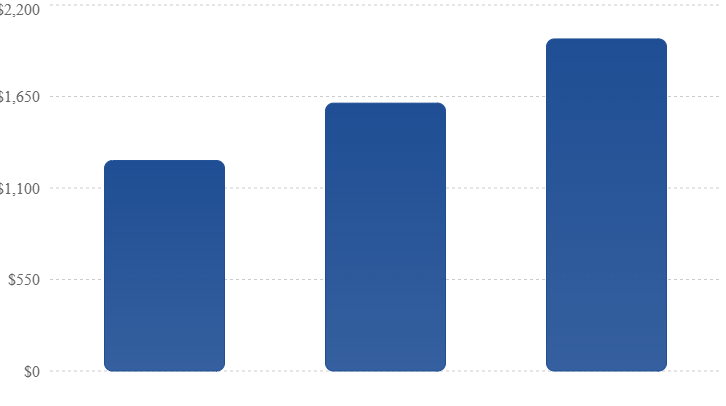
Consider the difference on a $300,000 mortgage.
Monthly principal and interest on a $300,000 mortgageIllustrative 30-year fixed-rate loan, excluding taxes, insurance, HOA fees, and closing costs.
Illustrative calculations using standard loan amortization.
At a 3% interest rate, the principal and interest payment would be approximately $1,265 per month.
At 7%, it rises to about $1,996.
That’s a difference of more than $700 every month, without any increase in the amount borrowed.
For younger buyers, these financing costs can make homeownership feel increasingly distant.
And when renting also consumes a large share of income, saving enough for a down payment becomes even more difficult.
In 2026, Inflation Is Still Squeezing American Paychecks

One of the biggest problems facing younger workers is that prices don’t have to rise dramatically every month to create long-term financial pressure.
Even when inflation slows, prices generally remain higher than they were before.
A family that once spent $100 on groceries may now need considerably more to purchase a similar basket of food.
And when the costs of housing, transportation, insurance, and utilities rise together, households can find themselves struggling despite receiving occasional pay increases.
The latest available Consumer Price Index report, released by the U.S. Bureau of Labor Statistics on October 14, 2026, showed that consumer prices had increased 3.7% over the previous 12 months.
Gasoline prices rose 9.1% in September alone, while shelter costs also increased.
These developments have renewed concerns about purchasing power, particularly among households with little room in their budgets for unexpected increases.
2026 M09 Results
For a worker already spending nearly everything they earn, even a relatively small increase in essential expenses can make the difference between breaking even and accumulating debt.
Nearly Half of Americans Under 30 Still Live With Their Parents
The financial pressure on younger Americans is reflected in federal research.
According to the Federal Reserve’s May 2026 report on household economic well-being, based on its 2025 survey:
Adults under 30 living with a parent
49%
Adults 18–29 receiving outside financial help
47%
All adults concerned about price increases
91%
All adults able to cover a $400 emergency with cash or equivalent
63%
Federal Reserve, Economic Well-Being of U.S. Households in 2025, published May 2026. Financial help refers to assistance from outside the household in the previous 12 months.
May 2026
These numbers reveal a complicated picture.
Most American adults still report managing financially, but younger adults and lower-income households face greater difficulties.
Living with parents can be a practical and financially responsible decision.
However, for young adults who want independence, marriage, children, or a home of their own, it may also reflect limited affordable alternatives.
The American Dream Is Arriving Later Than Ever

Perhaps the clearest evidence of changing financial expectations comes from the housing market.
According to the National Association of Realtors’ 2025 Profile of Home Buyers and Sellers, the median age of first-time homebuyers reached 40.
That’s a dramatic change from the late 1980s, when first-time buyers were typically in their late twenties.
First-time buyers also accounted for just 21% of home purchases in the survey, a record low.
The findings suggest that many Americans are taking considerably longer to reach a milestone that previous generations often achieved earlier.
National Association of REALTORS
Of course, not everyone wants to own a home.
Some people prefer renting for flexibility, convenience, or lifestyle reasons.
But for those who do want to buy, the combination of high housing costs, expensive financing, and limited savings can create substantial barriers.
And every year spent struggling to accumulate a down payment can delay other financial goals.
Why Budgeting Alone Cannot Solve Every Financial Problem
Personal budgeting remains important.
Understanding where money goes can help people identify unnecessary expenses, prepare for emergencies, and avoid costly borrowing.
But there is a limit to what budgeting can accomplish.
If someone’s monthly take-home income is $3,300 and their essential expenses total $3,450, eliminating a $5 coffee once a week will not solve the underlying problem.
The household has a structural shortfall.
It needs some combination of higher income, lower major expenses, assistance, or a change in circumstances.
This is why financial advice that focuses exclusively on minor purchases can feel disconnected from reality.
A worker may be extremely disciplined and still struggle to afford housing in an expensive metropolitan area.
Someone else may earn a similar salary in a lower-cost region and have considerably more disposable income.
Location, family responsibilities, healthcare needs, transportation, and debt obligations all affect financial stability.
Two people earning the same salary can experience completely different financial realities.
Is Gen Z Actually Worse Off Than Millennials?
The answer is more complicated than a simple yes or no.
Millennials and Gen Z entered adulthood under different economic conditions.
Many Millennials experienced the Great Recession, a difficult early-career job market, and the long-term effects of student debt.
Gen Z has faced the COVID-19 pandemic, rapid inflation, expensive housing, and a changing labor market shaped increasingly by automation and artificial intelligence.
Some Gen Z workers have benefited from higher starting wages in certain industries.
Others face difficult entry-level job markets and rising living costs.
The comparison also depends on the age at which each generation is measured.
Comparing a 23-year-old Gen Z worker with a 40-year-old Millennial who has spent nearly two decades building a career can be misleading.
Both generations have encountered financial obstacles, but their experiences vary widely.
What unites many of them is a concern that traditional milestones — homeownership, financial independence, and retirement security — require more time and resources than expected.
What Can Younger Workers Actually Do?

Although individuals cannot control inflation or the housing market, there are practical ways to improve financial resilience.
For workers facing a tight budget, the largest opportunities often involve major expenses rather than small purchases.
Housing costs, transportation, insurance, and debt payments typically have a greater impact than occasional entertainment spending.
Sharing housing, reviewing insurance policies, seeking lower-cost transportation, or negotiating higher pay can sometimes create meaningful savings.
However, these options are not available or realistic for everyone.
A person living in an area without reliable public transportation may need a car.
Someone supporting family members may not be able to take on roommates.
And workers with limited employment opportunities may have little bargaining power.
Financial stability therefore requires both individual planning and broader economic conditions that make essential needs affordable.
The goal should not be to shame people for struggling.
It should be to understand the causes of financial pressure and identify realistic solutions.
The Bigger Problem Isn’t Coffee — It’s the Cost of Building a Life
For years, younger Americans have heard variations of the same advice.
Work hard.
Spend less.
Save consistently.
Avoid unnecessary debt.
And eventually, financial stability will follow.
Those principles can still be useful.
But the experiences of Millennials and Gen Z demonstrate that personal responsibility is only one part of the equation.
When housing, transportation, healthcare, and education consume a large share of income, even disciplined workers can struggle to build savings.
A person working full-time should not automatically expect a luxurious lifestyle.
But the question many younger Americans are asking is whether full-time employment should provide a realistic path toward basic financial independence.
For some workers, it does.
For others, the numbers simply don’t add up.
And that is why a handwritten monthly budget can spark such a powerful conversation.
The $96 That Explains an Entire Generation’s Frustration
Return to the original budget.
A worker brings home $1,946 each month.
After the four listed expenses, just $96 remains.
ORIGINAL HANDWRITTEN BUDGET
Monthly take-home income
$1,946
Listed monthly expenses
$1,850
Remaining money
$96
95.1% spent4.9% remaining
That $96 isn’t enough to build a substantial emergency fund quickly.
It isn’t enough to comfortably absorb a major car repair.
And it offers little opportunity to save for a down payment on a home.
Even if the worker’s circumstances differ from the average American household, the calculation illustrates a real financial vulnerability.
When almost every dollar is already committed, even a small unexpected expense can become a crisis.
A Generation Asking a Different Question

The conversation surrounding Gen Z’s finances is ultimately about more than a single paycheck.
It is about expectations.
Previous generations often associated steady employment with the possibility of gradually building a comfortable life.
For many younger Americans, that path now appears less predictable.
A college degree does not guarantee a high-paying job.
A full-time salary does not guarantee affordable housing.
And responsible spending does not always translate into meaningful savings.
Yet the story is not entirely pessimistic.
Younger workers are increasingly discussing salaries, debt, housing costs, and financial expectations openly.
They are questioning traditional career paths, exploring different living arrangements, and looking for new ways to achieve financial security.
Millennials, having experienced many similar frustrations, may understand those concerns better than anyone.
Perhaps the most important lesson is that financial hardship should not automatically be treated as a personal failure.
Sometimes, the problem is poor spending decisions.
Sometimes, it is insufficient income.
And sometimes, it is an economic environment in which the basic costs of living have become difficult to manage.
The real question isn’t why young Americans won’t stop buying avocado toast. It’s why so many are finding it difficult to save money even when they work full-time.
And until that question receives serious attention, the debate between generations is unlikely to disappear.
Sources and Further Reading
- Federal Reserve — Economic Well-Being of U.S. Households in 2025.
May 2026
- U.S. Bureau of Labor Statistics — September 2026 Consumer Price Index.
2026 M09 Results
- National Association of Realtors — 2025 Homebuyer Report.
National Association of REALTORS
Editor’s note: The original social media image does not establish the identity of the worker or independently verify their expenses. The $1,946 budget is reproduced from the supplied image, while the $3,450 budget and $3,300 take-home pay are illustrative scenarios created to explain financial pressures. They should not be interpreted as verified personal financial records or national averages. Illustrative photographs do not depict the person in the original post.
Do you think a full-time job should be enough to afford a home, pay the bills, and save for the future? Or have expectations become unrealistic? Share your opinion in the comments. 💬