If you don’t know the sea’s laws and how it functions, your day at the beach could end disastrously. In particular, rip current events can be quite hazardous to persons who are ignorant. It’s crucial to understand how to recognize rip currents and what to do if you get caught in one if you’re going to spend the day at the beach.
Rip currents are strong, constrictive waterways that move away from the shore. Even the most adept swimmers might be dragged into the ocean by these currents due to their enormous pull. Despite the fact that they can be challenging to notice, if you know what to look for, you can avoid them and remain safe when swimming.
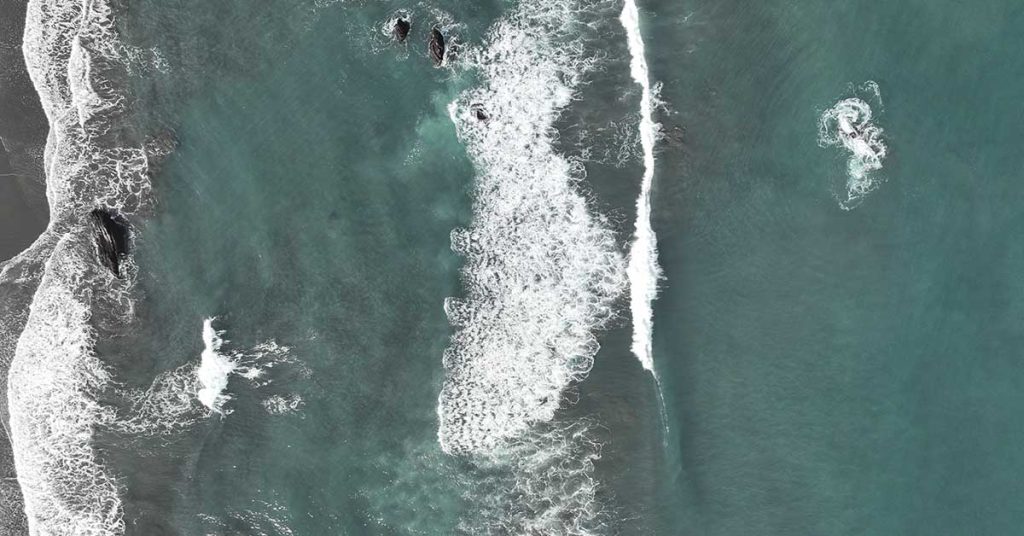
Waves, wind, and the configuration of the shoreline are frequently combined to create rip currents. They are more prevalent on beaches with a sharp drop-off and close-to-shore surf. The water that is pushed nearer the coast by breaking waves must eventually flow back out to sea. Rip currents enter the scene at this point. When this water rushes back out to sea in a narrow channel, rip currents are created.
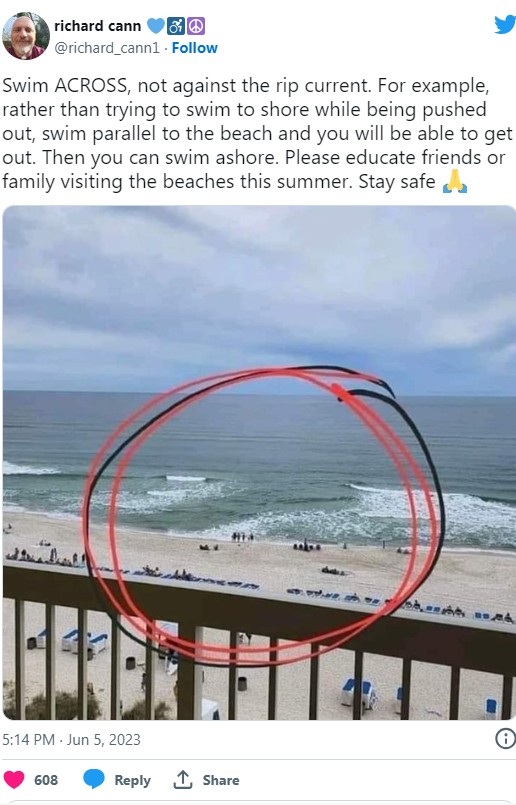
Although it can be challenging to notice rip currents, there are a few indicators you can watch for. Look at the waves’ direction first. When a wave has a foamy, white cap, it should be breaking close to the shore as it rolls in towards the beach. A pocket of calm water near the beach that is actually a rip current is common. You might believe that this is the ideal area to enter the sea without any waves if you aren’t an experienced swimmer in the ocean. This could also resemble a disruption in the wave pattern, when the water is not breaking as it should. These are frequently indicators of rip currents.
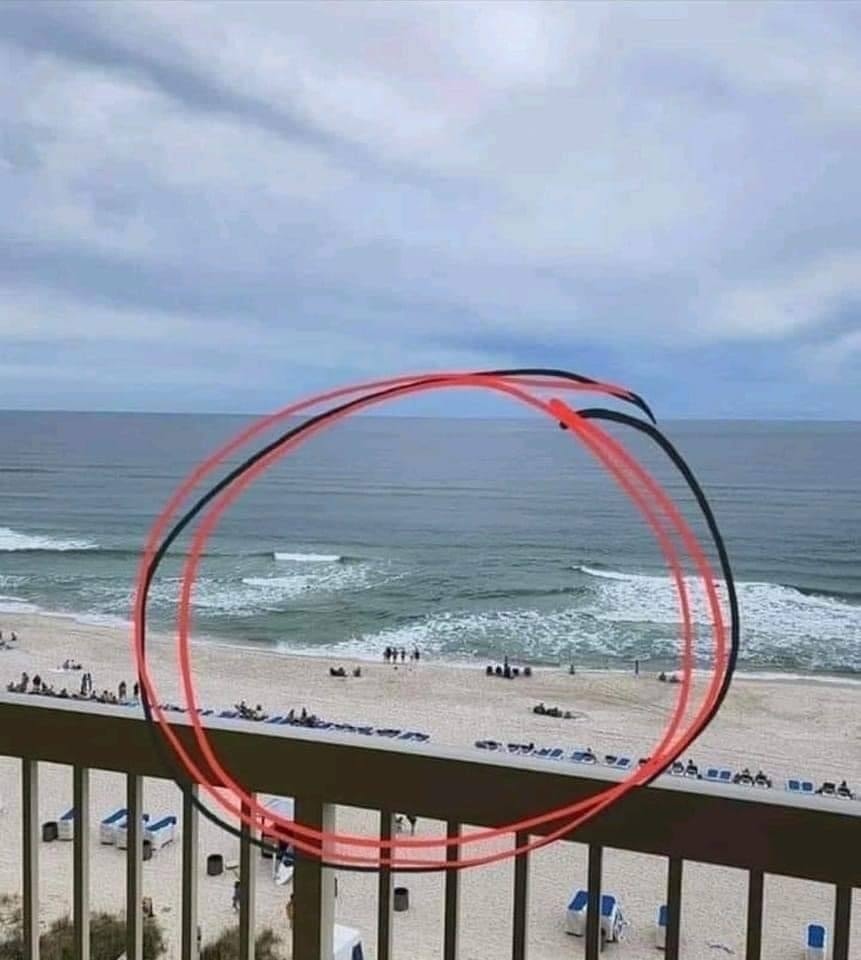
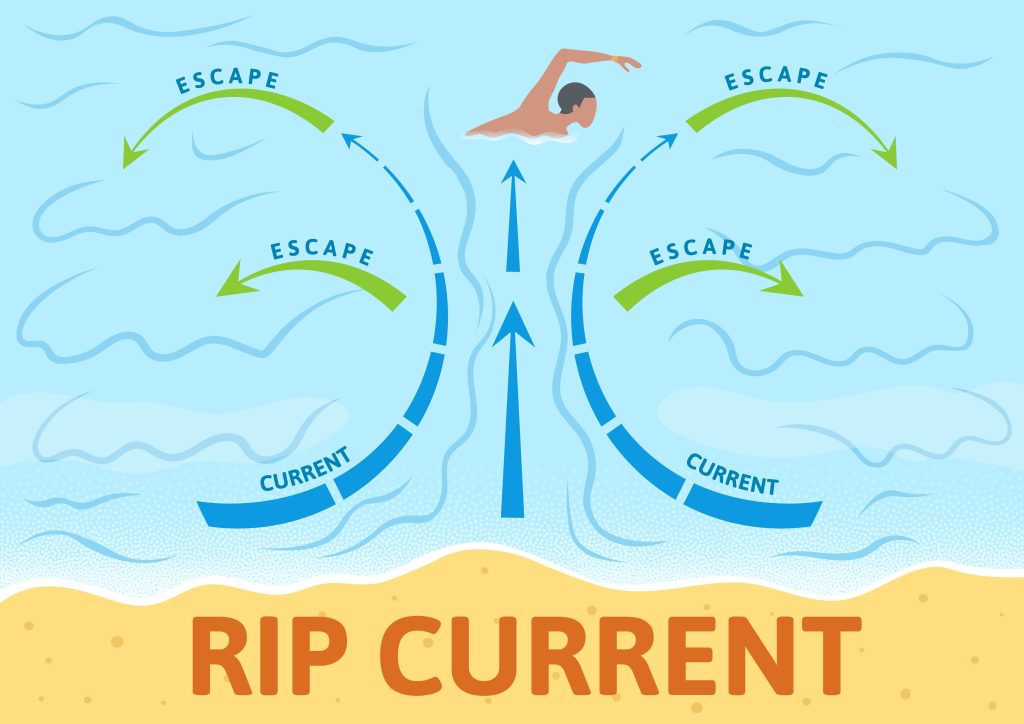
It’s crucial to maintain your composure if you get swept up in a rip current. Avoid attempting to swim against the current because doing so will wear you out. Swim parallel to the coast instead, going against the stream until you are free of it. Once you are free of the current, you can swim back to land. It’s crucial to keep in mind that you don’t need to be a good swimmer to escape a rip current. You’ll reach the shore more quickly if you can paddle with your hands while floating on your back. Once you are out of the rip current, you could feel quite worn out. If so, float on your back rather than attempting to swim to shore and let the waves drive you there naturally.
Additionally, keep in mind that rip currents are distinct from rip tides and undertows. Waves and wind have no bearing on rip tides, which are brought on by the gravitational attraction of the moon and sun. It is a strong current that develops along a barrier beach as a result of the tide drawing water through an inlet. There is a strong flow of water through an inlet towards the ocean when the tide is dropping. If you don’t understand tides and tidal flow, these are extremely dangerous and difficult to forecast.
Undertows, which are less intense than rip currents, are brought on by the water flowing back out to sea when a wave breaks. enormous uprushes and backwashes of water and sand are produced by enormous breaking waves on the beach. The subsequent breaking wave is drawn into contact with this sand and water mixture as it flows back towards the ocean. If you are in an undertow, the wave breaking over your head will typically seem like it is squeezing you underwater. Although the wave may knock you around, the undertow won’t drag you out to sea and isn’t usually as harmful for grownups. Children, however, may find this unsafe because they lack the strength to walk through the rushing water and back up the beach.
Although rip currents can be deadly, you can stay safe in the water if you know how to recognize them and what to do if you get sucked up in one. Never swim alone, and always be mindful of your surroundings. Avoid beaches with high waves if you are not a strong swimmer, and think about using a life jacket when swimming. Additionally, pay attention to any signs that indicates whether a certain beach is recognized for having a strong undertow or whether it is frequently a rip current or rip tidal site. It’s usually advisable not to enter the ocean if there are red flags flying at the beach. You can have a worry-free day at the beach if you do a little research and planning.